We get asked to recommend Bird Taxidermy Resources by our friends, we now include below a list of those we have had favourable
feedback on this is not a complete list, if you don't find what your looking
for then please feel free to contact us. If you also wish to link to us
then your taxidermy information shall only be placed in the appropriate
class.
We are interested in Purchasing Victorian Taxidermy, please respond via this on-line form of what you have for sale. HERE
.
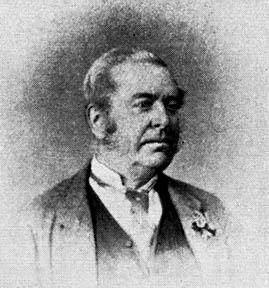
Henry Shaw 1812-1887
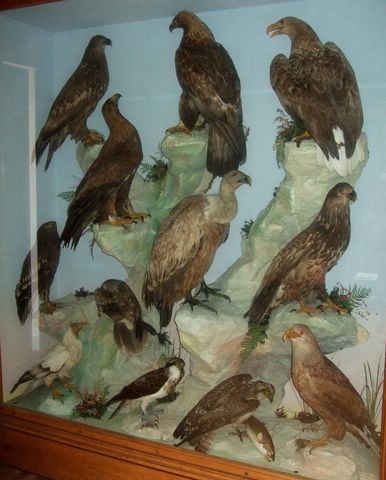
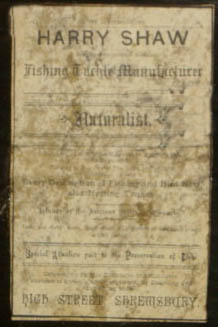
Henry Shaw, familiarly known as “Harry” Shaw, was born at Tarporley, Cheshire, October 3, 1812. He came to Shrewsbury as a boy, and was educated by Mr. David Parkes, of Castle Street, a well-known man in his day. He must have been a boy of quick perceptions, for in after life he displayed an amount of information on his particular line of work which few men could equal. His father’s shop was a small one in Shoplatch, and was demolished in 1868 to make room for the New Market Hall. Henry and his brother John worked at taxidermy under their father, and for some time after his death remained in partnership but eventually they separated. Both started in business at Shrewsbury and were clever men at their profession, but Harry, owing to his more genial nature, got on much better that John with the country gentlemen, and thus secured most of them as his patrons. He secured the orders to mount and arrange the collection of Birds at Hawkstone, Clungunford, and Ludlow Musuem, and received large sums of money for the work done at those places.
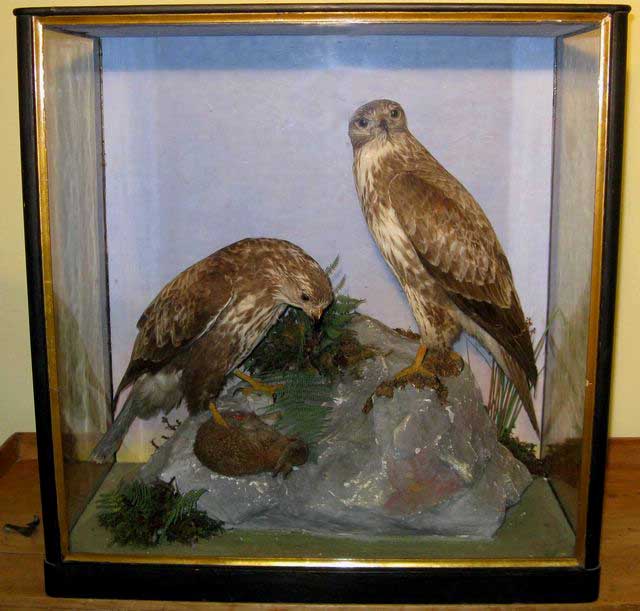
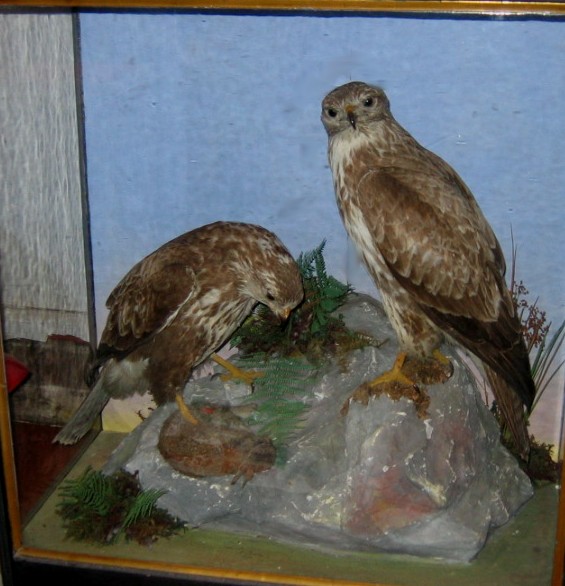
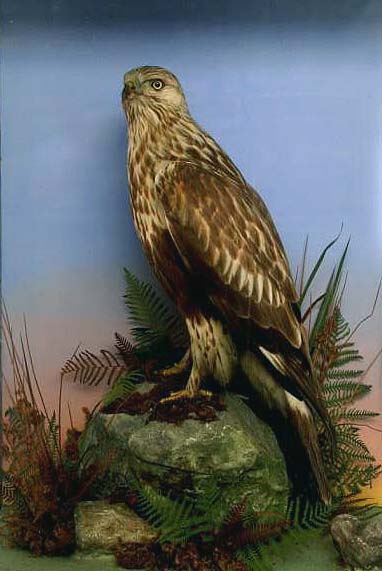
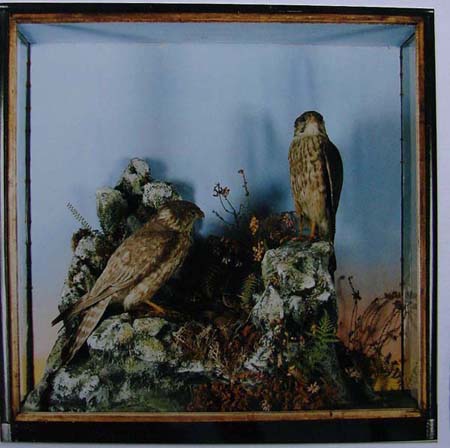
Victorian pair of Common Buzzards by Henry Shaw
.
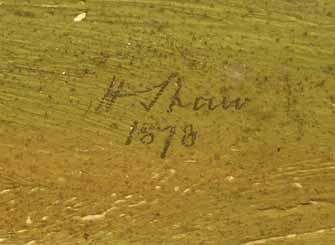
Henry Shaw 1812-1887, signature on the rockwork of the case above
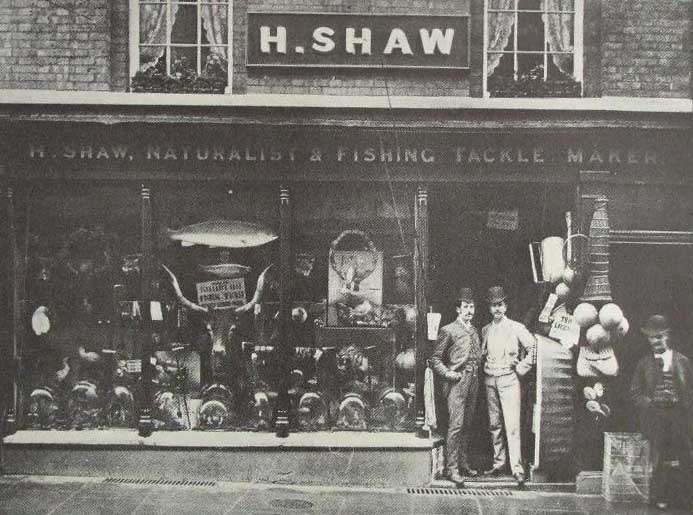
Henry Shaw's premises in Shropshire.
Victorian pair of Common Buzzards by Henry Shaw
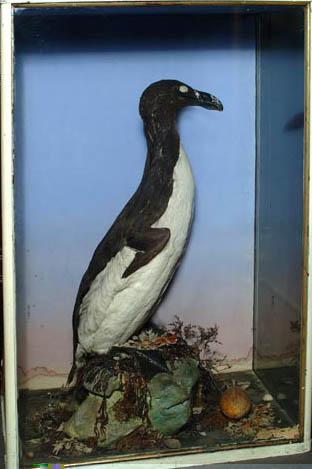
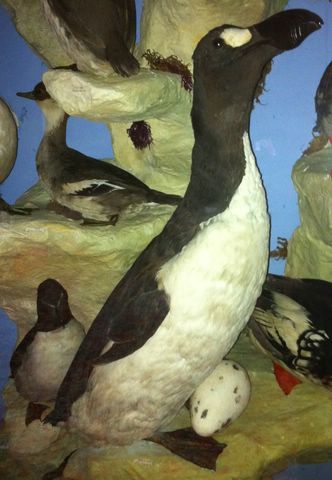
Lord Hill appointed him curator to his collection at an annual salary, and by this means Henry Shaw became so famous as a taxidermist that orders flowed in to him from all parts of the kingdom. The first “Short-toed Lark” found in Britain was recognised by him and sent up to Mr. Yarrell, who recorded it in his “History of British Birds.” He moved into his well-known shop at 45 High Street in 1870. Besides the collections named above, Henry Shaw was mainly instrumental in arranging and mounting those belonging to Col. Wingfield, at Onslow; Earl Powis, at Powis Castle; Mr. Naylor, at Leighton Hall; the Duke of Westminster, at Eaton Hall; the Duke of Portland, Welbeck Abbey; and many others. This work at Welbeck was the last that he lived to accomplish, for he died after only a few days’ illness October 7th 1887, a hale, strong man, at 75; he was a Hercules as a young man, and many tales are told of his prowess as a fighter. Probably few other men could say that they had had through their hands three specimens of the rare, and now extinct, Bird - the Great Auk.
Great Auk by Henry Shaw.
His love of Sport continued to the end of his life; an expert salmon fisher, he rented part of the Wye and caught a rare lot of fish there annually; indeed, he probably owed his death to exposure to cold while salmon fishing at Builth, which brought on pleurisy. His snow-white hair, big powerful figure, and ruddy countenance must yet linger in the memory of most residents in Shrewsbury.Many thanks Peter / Darwin Country
website and Shrewsbury Museums Service.
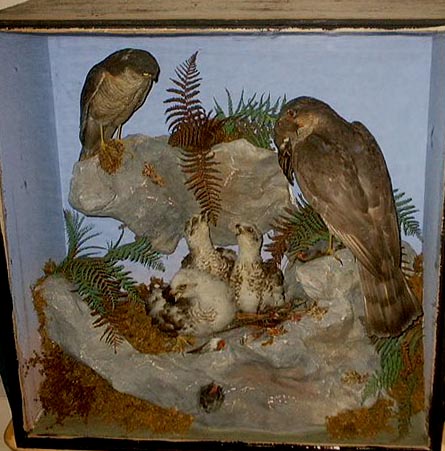
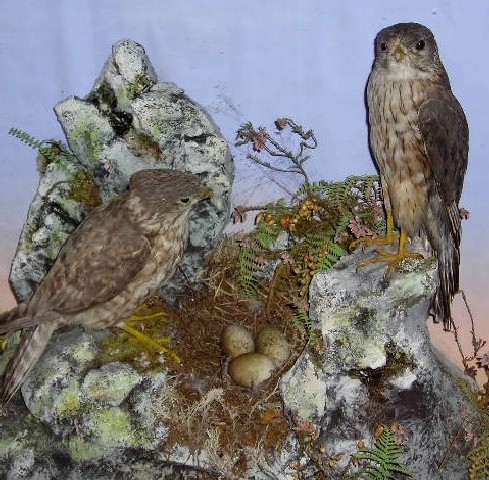
Victorian Merlins with eggs by Henry Shaw
Victorian Merlins with eggs by Henry Shaw in close up
Great Northern Diver by Henry Shaw.
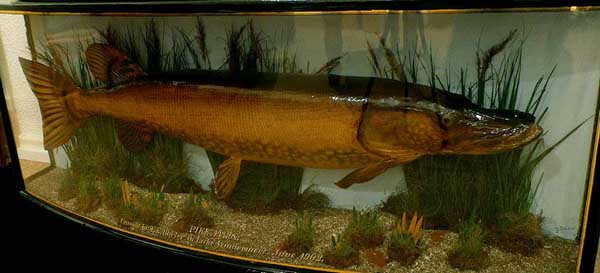
European Pike by John Shaw.
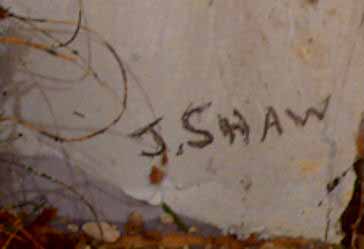
Signature for the case above by John Shaw.
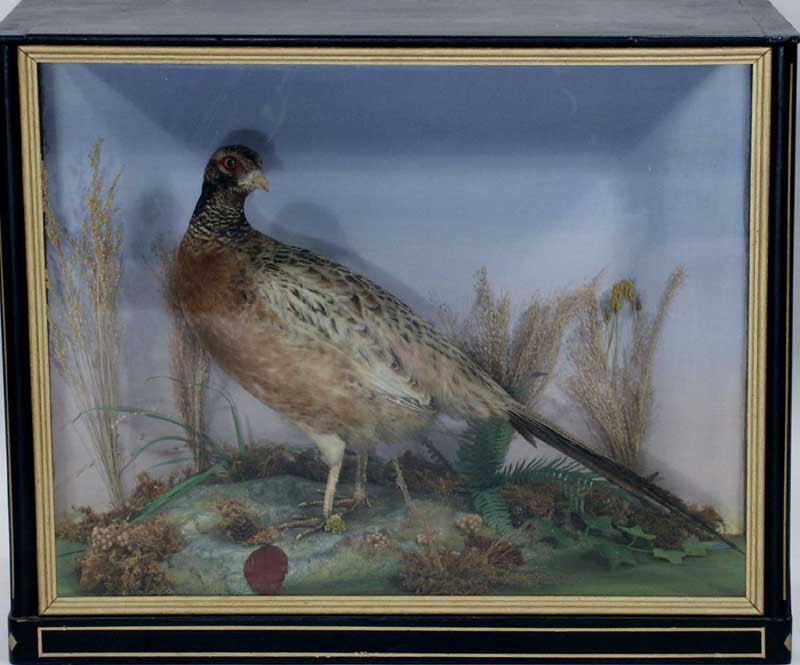
European Pheasant by Henry Shaw.
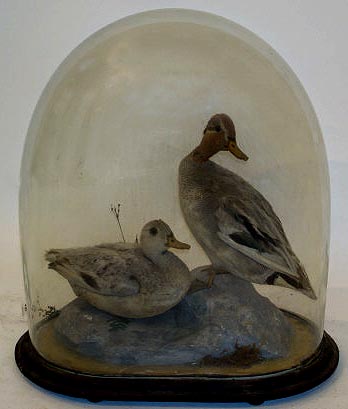
European Teal by Henry Shaw under a "shade", the historic name for a glass dome.
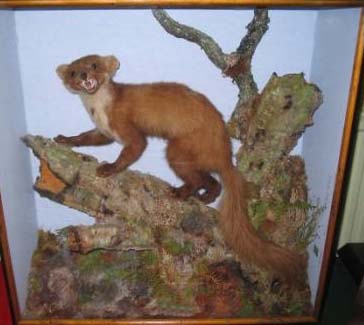
European Pine Marten by Henry Shaw.
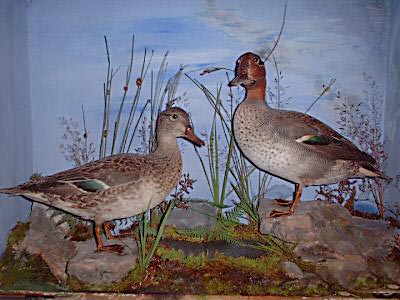
European Teal by Henry Shaw.
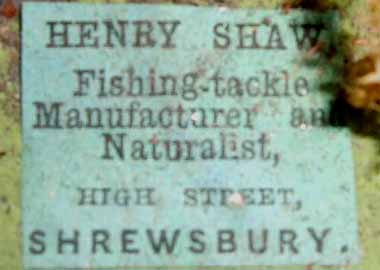
Victorian label by Henry Shaw of Shrewsbury.
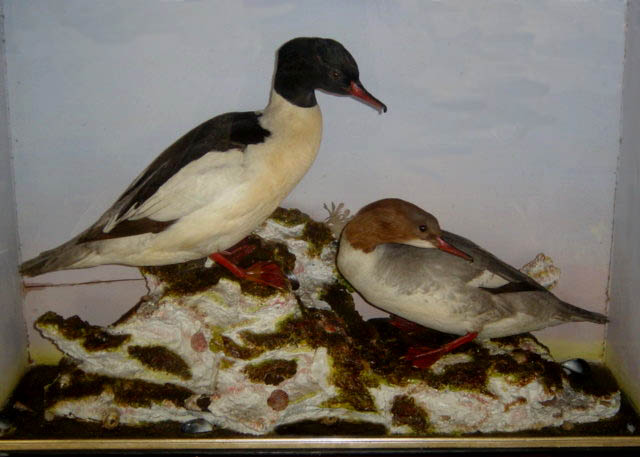
European Gooseanders by Henry Shaw.
Victorian label from Henry Shaw.
Great Northern Diver in close up by Henry Shaw.
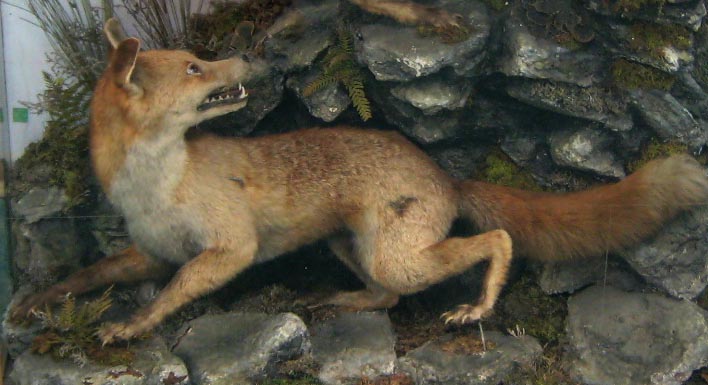
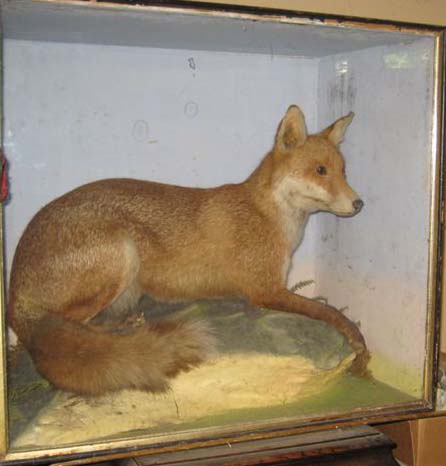
European Red Fox by Henry Shaw.
John Shaw
John Shaw.
European Fox by Henry Shaw.
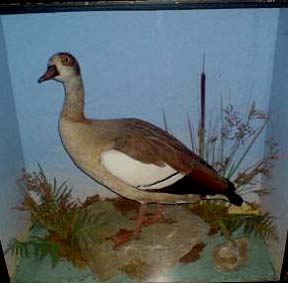
Egyptian Goose by Henry Shaw.
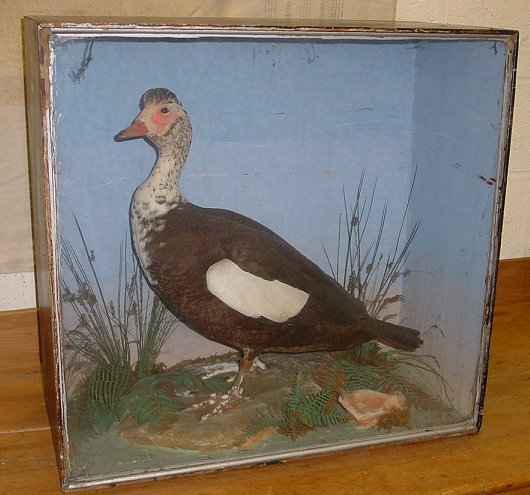
Moscovey Duck by Henry Shaw.
John Shaw was a taxidermist in partnership with his brother Henry in Shrewsbury. He was a man of shorter stature and less robust frame than his brother. On the dissolution of the partnership with Henry Shaw he took a shop near the High Street end of the Wyle Cop, opposite St. Julian’s Church, ultimately removing to premises three doors away, now No. 82, of which he became the owner, and which he occupied until his death.
Henry Shaw's premises in Shropshire.
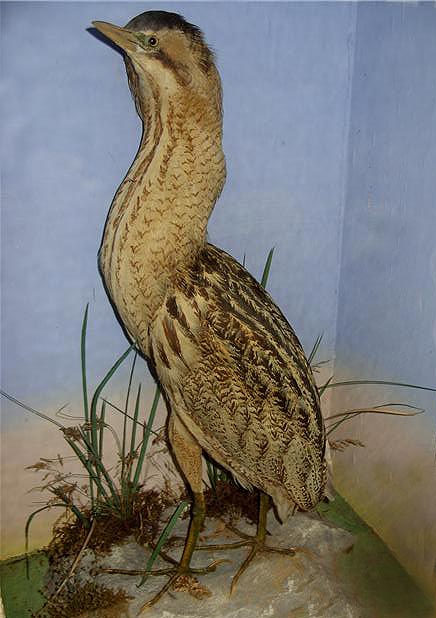
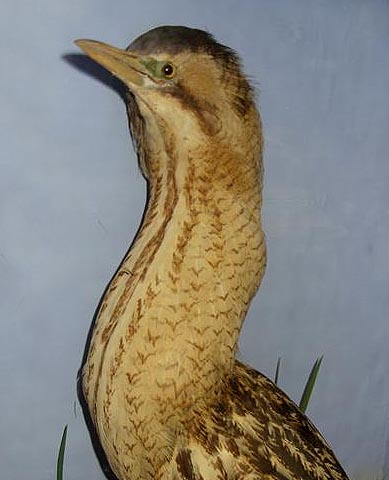
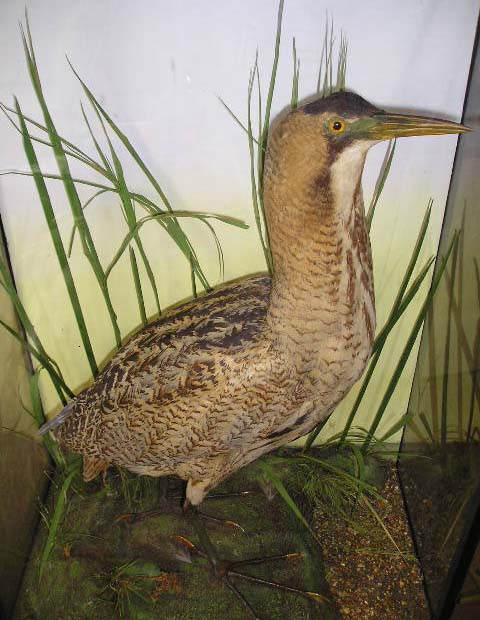
European Bittern by Henry Shaw.
Taxidermy4Cash does not undertaken taxidermy, rather we are collectors of
other people’s work, both current and historical we also offer web hosting,
a search engine submission service and increasingly one of the larger
article resource banks on the net. So if your keen to learn about Taxidermy
etc, then you know where to look.
We are always interested to here about new resource, if you feel a resource
should be listed here then please contact us.
ITEMS
WANTED. Please respond via this on-line form HERE
with a description of what you have for sale.